
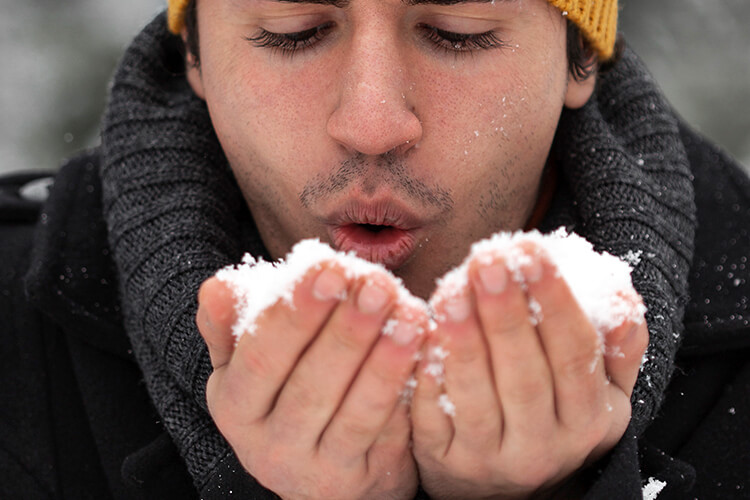
First aid measures vary depending on the degree of frostbite, the state of general cooling of the human body, its age, and existing diseases. When providing first aid, it is necessary to stop the cooling process and warm the limbs to restore blood circulation in the tissues affected by the cold in order to prevent the development of infectious complications. First, take the victim to the nearest warm room, remove their shoes, outer clothing, socks, and gloves. While taking these initial measures, call an ambulance to provide qualified assistance to the victim.
In case of first-degree frostbite, the cooled areas of the body should be warmed up to redness with warm hands, light massage, rubbing with woolen fabric, breathing, and then a cotton-gauze bandage should be applied.
In case of frostbite of II-IV degree, do not warm up, massage, or rub the affected area. Apply a heat-insulating bandage to the affected area (a layer of gauze, a thick layer of cotton wool, another layer of gauze, and oilcloth or rubberized fabric on top). Immobilize the affected limbs using improvised means (a piece of board or plywood, thick cardboard), which are applied and secured on top of the bandage. Quilts, coats, woolen fabric, etc. can be used for thermal insulation. Give the affected person warm liquids, hot food, a small amount of alcohol, an aspirin or analgin tablet, 2 tablets of "No-shpa" or papaverine. Do not rub the affected areas with snow, as this can damage the blood vessels in the upper and lower limbs. Do not quickly warm frostbitten limbs near a fire or use heating pads and other heat sources without supervision, as this will worsen the frostbite. The use of oils and fats and rubbing the limbs with alcohol in cases of deep frostbite is not recommended as an ineffective first aid option. In cases of mild general hypothermia, an effective treatment method is to warm the victim in a warm bath with an initial water temperature of 24 °C, gradually increasing the water temperature to normal body temperature. If the victim has moderate or severe hypothermia, with impaired breathing and blood circulation, they must be taken to a medical facility immediately.


